
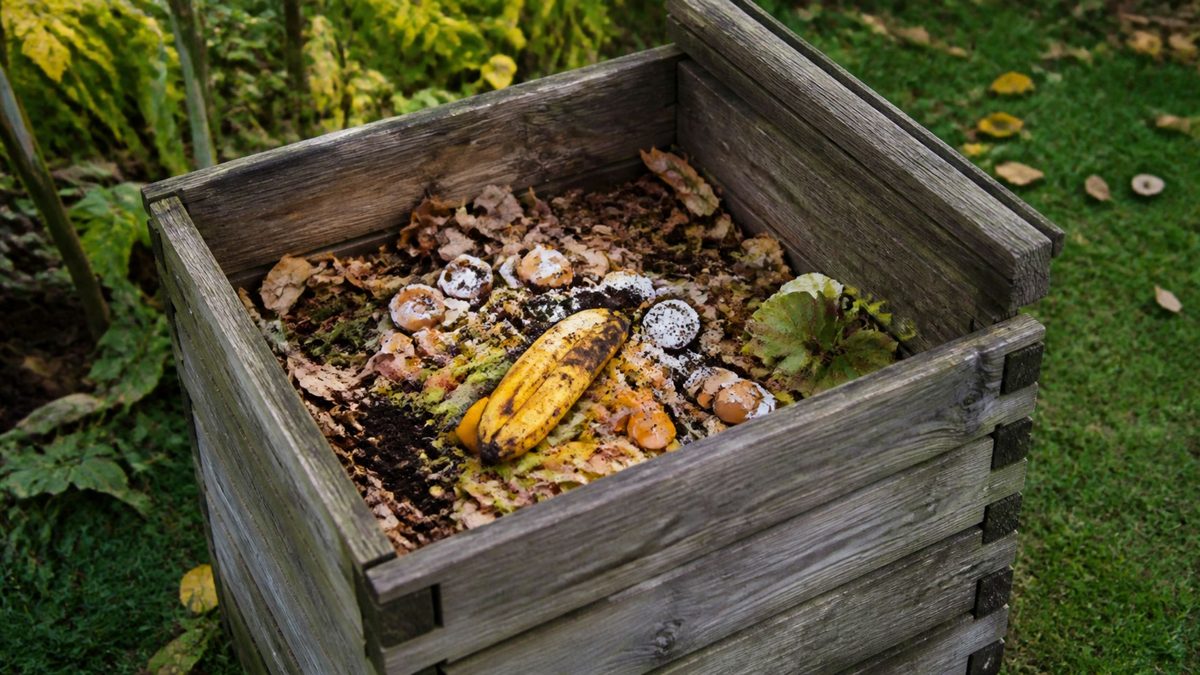
Short answer: you can compost fruit and vegetable scraps, coffee grounds and paper filters, crushed eggshells, plastic-free tea bags, dry leaves, grass clippings, twigs, shredded plain paper and cardboard, and untreated wood chips. Don't put meat, fish, bones, dairy, oils and grease, pet waste, glossy paper, produce stickers, diseased plants, weeds with seeds, treated wood or "compostable" cups and bags in a backyard pile. Those last ones need an industrial facility. The rule of thumb: mix roughly equal volumes of wet "greens" and dry "browns," and leave out anything that attracts animals or won't break down at backyard temperatures.
Composting is one of the few household habits where the climate math is clear. Food is the largest single material in US landfills, and because it rots fast without oxygen, it produces more landfill methane than anything else. EPA estimates that food is about a quarter of landfilled waste but 58% of the methane that escapes from landfills. Composting the same scraps, with air, produces mostly CO₂ and water instead.
The list below is for a backyard pile or bin. City green-bin programs and industrial composters often accept more, including meat and certified compostable packaging. Check your local rules.
The basic rule: greens and browns
- Greens are wet and rich in nitrogen: food scraps, grass, coffee grounds.
- Browns are dry and rich in carbon: leaves, twigs, paper, cardboard.
Too many greens and the pile turns slimy and smells. Too many browns and it just sits there. Aim for roughly equal volumes, keep it as damp as a wrung-out sponge, and turn it every week or two.
50 things you can compost
Kitchen scraps (greens)
| # | Item | Note |
|---|---|---|
| 1 | Fruit scraps and peels | Including citrus in moderation |
| 2 | Vegetable scraps and peels | |
| 3 | Apple and pear cores | |
| 4 | Banana peels | Chop to speed up |
| 5 | Spoiled fruit and vegetables | |
| 6 | Coffee grounds | One of the best greens |
| 7 | Paper coffee filters | |
| 8 | Loose tea leaves | |
| 9 | Paper tea bags | Only if plastic-free; see below |
| 10 | Crushed eggshells | Crush so they break down |
| 11 | Corn cobs and husks | Slow; chop the cobs |
| 12 | Herb stems | |
| 13 | Pumpkins and squash | Break them up first |
| 14 | Avocado skins | Pits take years; skip or crush |
| 15 | Onion and garlic skins | |
| 16 | Nut shells | Not walnut shells in large amounts |
| 17 | Plain rice, pasta and bread | Small amounts only (EPA) |
| 18 | Plain popcorn | Unbuttered |
| 19 | Seaweed and kelp | Rinse off salt |
| 20 | Stale cereal and crackers | Small amounts |
Paper and cardboard (browns)
| # | Item | Note |
|---|---|---|
| 21 | Shredded newspaper | Non-glossy |
| 22 | Brown paper bags | Shredded |
| 23 | Plain cardboard boxes | No tape, wax or glue (EPA) |
| 24 | Toilet paper and paper towel tubes | |
| 25 | Cardboard egg cartons | |
| 26 | Paper towels and napkins | If not used with chemicals |
| 27 | Uncoated paper plates | No plastic or wax lining |
| 28 | Greasy part of pizza boxes | Tear up; skip any plastic or cheese |
| 29 | Shredded office paper | Non-glossy, uncolored |
| 30 | Cardboard from cereal boxes | Remove plastic liner |
| 31 | Paper muffin cups | Plain, uncoated |
| 32 | Wooden toothpicks and chopsticks | Slow |
| 33 | Natural wine corks | Not plastic "corks" |
Yard and garden
| # | Item | Note |
|---|---|---|
| 34 | Dry leaves | The classic brown |
| 35 | Grass clippings | Thin layers; untreated only |
| 36 | Twigs and small branches | Chop or shred |
| 37 | Plant stalks | |
| 38 | Spent flowers | |
| 39 | Houseplant trimmings | Healthy ones only |
| 40 | Straw and hay | |
| 41 | Pine needles | In moderation; slow |
| 42 | Untreated wood chips | |
| 43 | Untreated sawdust | Thin layers |
| 44 | Pulled weeds without seeds | Let them dry first |
| 45 | Old potting soil | |
| 46 | Small amounts of wood ash | From untreated wood only |
Around the house
| # | Item | Note |
|---|---|---|
| 47 | Human and pet hair | Spread thin |
| 48 | 100% cotton or wool scraps | Cut small; no synthetic thread |
| 49 | Cut flowers from bouquets | Remove ties and wraps |
| 50 | Herbivore pet bedding | Rabbit or hamster paper or hay bedding, not cat litter |
15 things you shouldn't compost at home
| # | Item | Why |
|---|---|---|
| 1 | Meat and poultry | Attracts animals; a backyard pile isn't hot enough to break it down safely (EPA) |
| 2 | Fish and bones | Same (EPA) |
| 3 | Cheese and dairy | Same (EPA) |
| 4 | Fats, oils and grease | Same; also coat the pile and slow it (EPA) |
| 5 | Large amounts of cooked food | Same; small amounts are fine (EPA) |
| 6 | "Compostable" cups, cutlery and bags | Need industrial temperatures; won't break down in a backyard pile (EPA) |
| 7 | Glossy or coated paper | On EPA's "no" list |
| 8 | Produce stickers | Plastic; on EPA's "no" list |
| 9 | Pet waste and cat litter | Can carry parasites and germs (EPA "no" list) |
| 10 | Diseased or pest-infested plants | Can spread to the garden (EPA) |
| 11 | Aggressive weeds or weeds with seeds | Backyard piles may not kill seeds (EPA) |
| 12 | Herbicide-treated grass and plants | Some herbicides survive composting (EPA) |
| 13 | Treated or painted wood | Chemicals (EPA) |
| 14 | Dryer lint | On EPA's "no" list; most clothes contain synthetic fibers |
| 15 | Charcoal and coal ash | Can contain substances that harm plants |
Three things most compost lists get wrong
1. Tea bags. Many lists put "tea bags" under yes. But many bags, including some paper-looking ones, are sealed with or made from plastic (often polypropylene). That plastic doesn't break down. Choose loose tea or brands that say their bags are plastic-free, or cut open the bag and compost just the leaves.
2. "Compostable" packaging. A cup or fork labeled "compostable" is usually certified for industrial facilities, which run hotter and longer than a backyard pile. EPA says backyard piles generally don't get hot enough. In your pile, it may still be there next year.
3. Dryer lint. Lint is often listed as an easy brown, but EPA's home composting page puts it on the "no" list. Most household laundry contains polyester, acrylic or nylon, so lint is partly microplastic fibers. If you only wash 100% cotton or wool, it's a different story.
How long does composting take?
EPA says a well-kept pile is usually ready in three to five months, and up to a year if you leave it alone. Chopping scraps smaller, keeping the pile moist and turning it every week or two all speed things up. Finished compost is dark, crumbly and smells like earth.
Questions people ask
What can you compost at home? Fruit and vegetable scraps, coffee grounds and filters, crushed eggshells, plastic-free tea bags, dry leaves, grass clippings, twigs, shredded plain paper and cardboard, and untreated wood chips.
What should you not put in compost? Meat, fish, bones, dairy, oils and grease, large amounts of cooked food, pet waste, glossy paper, produce stickers, diseased plants, weeds with seeds, treated wood, dryer lint and "compostable" plastics.
Can you compost eggshells? Yes. Crush them first so they break down faster.
Can you compost coffee grounds? Yes, and paper coffee filters too. Coffee grounds are a good source of nitrogen.
Can you compost paper towels? Yes, if they haven't been used with cleaning chemicals or grease from meat.
Can you compost pizza boxes? The plain cardboard parts and lightly greasy parts, torn up, are usually fine. Remove any cheese, food bits or plastic.
Can you compost tea bags? Only if they're plastic-free. Many tea bags contain polypropylene. When in doubt, compost the leaves and throw out the bag.
Can you compost citrus peels? Yes, in moderation. Large amounts can make the pile more acidic and slow it down, and they take longer to break down.
Are compostable plastics compostable at home? Usually not. Most are certified for industrial composting, which runs hotter than a backyard pile.
Why can't you compost meat at home? It attracts animals and smells, and a backyard pile usually doesn't get hot enough to break it down safely. Some city green-bin programs accept it.
This article is general guidance for backyard composting. Local rules vary: city and county compost programs often accept items that a backyard pile can't handle. Check with your local waste authority.
References
- US Environmental Protection Agency. Composting at Home. epa.gov
- US Environmental Protection Agency. Quantifying Methane Emissions from Landfilled Food Waste (EPA-600-R-23-064), October 2023. epa.gov
- US Environmental Protection Agency. Sustainable Management of Food: Food: Material-Specific Data. epa.gov
The weekly readout
One email each Thursday: what we tested, which claim collapsed under a closer look, and the one number worth paying attention to.