
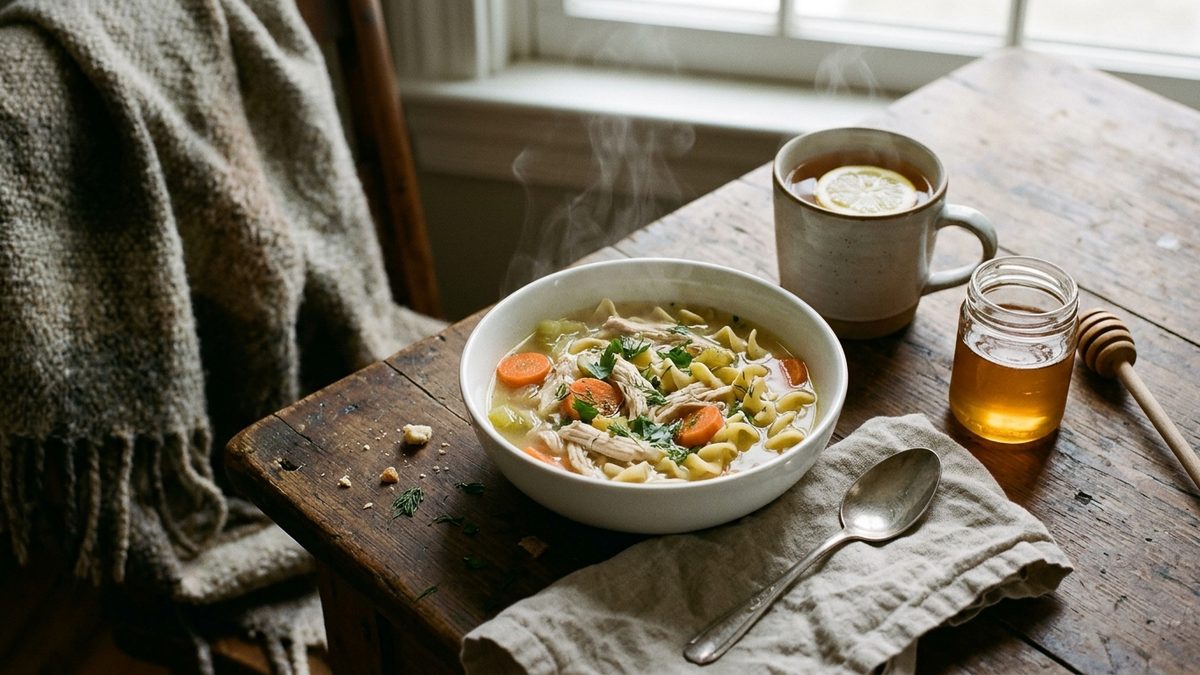
Short answer: the best foods to eat when sick are the ones that keep fluid and energy going in: broth and chicken soup, hot drinks, honey (for coughs, over age 1), water and oral rehydration drinks, bananas, rice, toast, oatmeal, eggs, yogurt, soft fruit and ice pops. Fluids come first. Of the popular remedies, honey has the best evidence: a meta-analysis of 14 studies found it improved cough and overall symptoms in upper respiratory infections compared with usual care. Vitamin C taken after symptoms start, large doses of garlic and "starving a fever" don't help. And you don't need to avoid milk.
No food cures a cold or flu. Food and drink do three useful things in the meantime: they replace fluid lost to fever, sweating, vomiting or diarrhea; they supply energy when appetite is low; and a few of them ease specific symptoms. The list below is sorted by which of those jobs each food does.
For why colds peak in winter in the first place, see does cold weather make you sick.
The 12 foods (and drinks) worth having
1. Chicken soup
Two small studies are behind its reputation. In 1978, researchers measured how fast mucus moved through the noses of 15 healthy volunteers after they sipped hot chicken soup, hot water or cold water. Five minutes later it had sped up from 6.9 to 9.2 mm per minute with soup and from 6.2 to 8.4 with hot water. By 30 minutes both were back to baseline. Cold water slowed it down, and nothing changed how easily air moved through the nose. In 2000, a lab study found that chicken soup reduced the movement of neutrophils, a type of white blood cell involved in inflammation, in a test tube. Neither study shows that soup shortens a cold. What soup reliably gives you is fluid, salt, some protein and warmth in a form that's easy to eat when nothing else appeals.
Evidence: weak for a specific effect, strong as a practical way to eat and drink.
2. Broth
Clear broth does most of what soup does, with fluid and sodium, and it's usually tolerated when solid food isn't. Useful on the first day of a stomach bug.
Evidence: practical, not trial-based.
3. Hot tea and other warm drinks
Herbal tea, hot water with lemon, or decaf if it's late. In the 1978 study, sipping hot water sped up nasal mucus flow for a few minutes, almost as much as soup.
Evidence: one small study, short-lived effect.
4. Honey
The best-supported item on the list. A 2021 systematic review and meta-analysis of 14 studies found that honey improved combined symptom scores, cough frequency and cough severity in upper respiratory tract infections compared with usual care. Against placebo the picture is less clear: only two studies could be pooled, and the difference wasn't statistically significant. A spoonful straight or stirred into warm tea is the usual way. Never give honey to a child younger than 1 year. The CDC warns that honey can contain the bacteria that cause infant botulism.
Evidence: better than usual care for cough in 14 studies of moderate quality; not confirmed against placebo.
5. Water and oral rehydration drinks
With fever, sweating, vomiting or diarrhea you lose water and salts. Small, frequent sips work better than large glasses when you feel sick. For vomiting and diarrhea, use an oral rehydration solution. Our article on how long it takes to rehydrate has the details.
Evidence: strong. The CDC's guidance on gastroenteritis in children is built on oral rehydration.
6. Bananas
Soft and bland, and the first of the four BRAT foods.
Evidence: practical.
7. Rice, toast and crackers
Plain starches are often the first solid food people can face after a stomach bug. They're a starting point, not a diet (see BRAT below).
Evidence: practical.
8. Oatmeal
Warm, soft and more nourishing than toast. Add a banana or honey.
Evidence: practical.
9. Eggs
Scrambled or boiled eggs add protein when you're ready for more than toast.
Evidence: practical.
10. Yogurt
Easy to swallow with a sore throat and a source of protein. You don't need to avoid it because of mucus. In a study of 60 volunteers deliberately infected with a cold virus (51 were analysed), the amount of milk and dairy they consumed had no statistically significant association with the weight of nasal secretions or with congestion.
Evidence: the "dairy makes mucus" belief isn't supported.
11. Soft fruit, applesauce and citrus
Fruit adds fluid, some energy and vitamin C as part of normal eating. That's different from taking vitamin C supplements once you're ill (see below). If your throat is raw, citrus may sting. Choose melon, berries or applesauce instead.
Evidence: practical.
12. Ice pops and ice chips
For a very sore throat, or when even sips of water come back up. Sucking on ice gets fluid in slowly. Useful for children who refuse to drink.
Evidence: practical.
What to eat for each illness
| Illness | Focus on | Go easy on |
|---|---|---|
| Cold or flu | Fluids, soup, hot drinks, honey for cough, normal meals as appetite allows | Alcohol |
| Sore throat | Warm drinks, honey, yogurt, soft foods, ice pops | Sharp, acidic or very spicy food |
| Stomach bug (vomiting, diarrhea) | Oral rehydration, small sips, then broth, rice, bananas, toast, eggs | Fatty and very sugary food and drink |
| Fever | Extra fluids, whatever you can eat | Skipping fluids |
What about the BRAT diet?
BRAT (bananas, rice, applesauce, toast) was standard advice for decades. It isn't any more. The CDC's guidance on managing gastroenteritis in children says to rehydrate first and then return to an age-appropriate, unrestricted diet, including solids, as quickly as possible. It calls the BRAT diet "unnecessarily restrictive" and says withholding food for more than 24 hours is inappropriate. The four foods are good places to start. Add eggs, yogurt, soup, lean meat and vegetables as soon as you can keep them down.
4 remedies that don't help much
1. Vitamin C, once you're already sick
A Cochrane review of placebo-controlled trials found that taking vitamin C every day before getting ill made no meaningful difference to how often people in the general population caught colds (29 comparisons, 11,306 participants). It did shorten colds slightly: by about 8% in adults and 14% in children. But trials that started vitamin C after symptoms began found no consistent effect on how long or how bad the cold was. Orange juice is a fine drink. It isn't a treatment.
2. Garlic in large amounts
The Cochrane review on garlic found a single usable trial, with 146 participants. Over 12 weeks there were 24 colds in the garlic group and 65 in the placebo group, but the reviewers concluded that one trial is insufficient evidence.
3. Zinc as a food strategy
Zinc is the closest call. A 2024 Cochrane review concluded that zinc may shorten a cold by about two days (8 studies, 972 people), but the evidence is low-certainty, and non-serious side effects such as altered taste and stomach upset are probably more common with zinc. Taking zinc to prevent colds may make little or no difference. The review is about zinc products, not zinc-rich foods.
4. "Feed a cold, starve a fever"
None of the reviews cited here supports either half. The CDC's guidance for children with gastroenteritis says the opposite of starving: don't withhold food for more than 24 hours. Eat what you can and keep drinking.
Also skip alcohol, including the hot toddy. See how long alcohol affects sleep.
When to call a doctor
The CDC's emergency warning signs for flu in adults include difficulty breathing, lasting chest or abdominal pain or pressure, ongoing dizziness or confusion, seizures, not urinating, severe muscle pain, serious weakness, and a fever or cough that improves and then returns or worsens. In children, add fast or labored breathing, bluish lips, no urine for eight hours, a fever above 104°F (40°C) that medicine doesn't control, and any fever in a baby younger than 12 weeks. The list isn't complete, so call about any symptom that worries you.
Questions people ask
What is the best food to eat when sick? Whatever keeps fluid and energy going in: broth or chicken soup, warm drinks, and bland foods such as bananas, rice, toast, oatmeal, eggs and yogurt.
Does chicken soup actually help a cold? It provides fluid, salt and warmth, and one small study found hot soup sped up nasal mucus flow for a few minutes. The studies cited here don't show that it shortens a cold.
What should I eat with the flu? Fluids first, then soup, toast, oatmeal, eggs, yogurt and fruit as your appetite returns. There's no special flu diet.
What should I eat after vomiting? Start with small sips of water or oral rehydration solution. When that stays down, try broth, crackers, rice, bananas or toast, then return to normal food.
Is the BRAT diet still recommended? Not as a diet. The CDC's guidance for children calls it unnecessarily restrictive and advises returning to a normal, age-appropriate diet as soon as possible after rehydration.
Does dairy make mucus worse? No. A study of 60 people infected with a cold virus found no significant association between milk intake and mucus or congestion.
Does honey help a cough? Compared with usual care, yes: a meta-analysis of 14 studies found it improved cough frequency and severity. It hasn't been confirmed against placebo. Don't give it to babies under one year.
Does vitamin C help when you're already sick? Trials that started vitamin C after symptoms began found no consistent benefit. Taking it daily beforehand shortened colds by about 8% in adults.
Should you eat when you have a fever? Yes, if you can, and keep drinking. None of the evidence cited here supports "starve a fever".
What should I drink when sick? Water, broth, herbal tea and, with vomiting or diarrhea, oral rehydration solution. Limit alcohol and very sugary drinks.
This article is general information, not medical advice. See a doctor for severe or lasting symptoms, and get advice early for infants, older adults and people with chronic conditions.
References
- Abuelgasim H, Albury C, Lee J. Effectiveness of honey for symptomatic relief in upper respiratory tract infections: a systematic review and meta-analysis. BMJ Evidence-Based Medicine 2021;26(2):57–64. doi:10.1136/bmjebm-2020-111336
- Saketkhoo K, Januszkiewicz A, Sackner MA. Effects of drinking hot water, cold water, and chicken soup on nasal mucus velocity and nasal airflow resistance. Chest 1978;74(4):408–410. doi:10.1378/chest.74.4.408
- Rennard BO, Ertl RF, Gossman GL, Robbins RA, Rennard SI. Chicken soup inhibits neutrophil chemotaxis in vitro. Chest 2000;118(4):1150–1157. doi:10.1378/chest.118.4.1150
- Hemilä H, Chalker E. Vitamin C for preventing and treating the common cold. Cochrane Database of Systematic Reviews 2013;(1):CD000980. doi:10.1002/14651858.CD000980.pub4
- Nault D, Machingo TA, Shipper AG, et al. Zinc for prevention and treatment of the common cold. Cochrane Database of Systematic Reviews 2024;(5):CD014914. doi:10.1002/14651858.CD014914.pub2
- Lissiman E, Bhasale AL, Cohen M. Garlic for the common cold. Cochrane Database of Systematic Reviews 2014;(11):CD006206. doi:10.1002/14651858.CD006206.pub4
- Pinnock CB, Graham NM, Mylvaganam A, Douglas RM. Relationship between milk intake and mucus production in adult volunteers challenged with rhinovirus-2. American Review of Respiratory Disease 1990;141(2):352–356. doi:10.1164/ajrccm/141.2.352
- King CK, Glass R, Bresee JS, Duggan C. Managing acute gastroenteritis among children: oral rehydration, maintenance, and nutritional therapy. MMWR Recommendations and Reports 2003;52(RR-16):1–16. cdc.gov
- Centers for Disease Control and Prevention. Botulism Prevention. cdc.gov
- Centers for Disease Control and Prevention. Signs and Symptoms of Flu. cdc.gov
The weekly readout
One email each Thursday: what we tested, which claim collapsed under a closer look, and the one number worth paying attention to.