

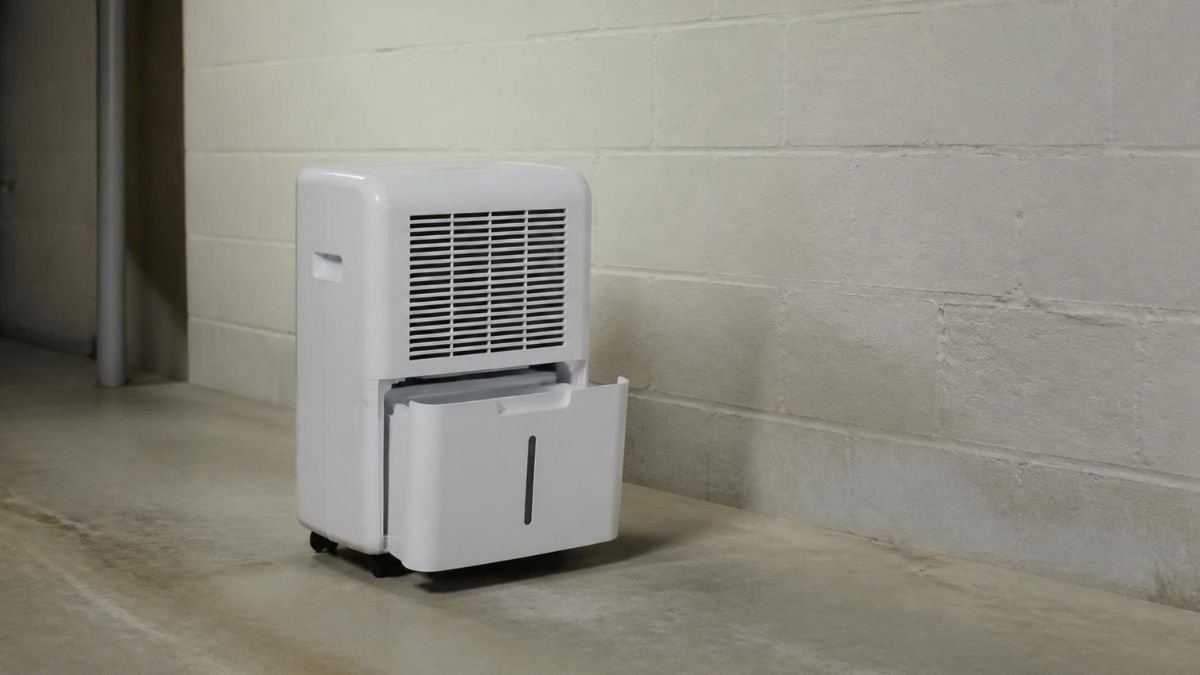
Short answer: yes, as prevention. Mold cannot grow without moisture, and a dehumidifier that holds a room below 60% relative humidity, ideally 30 to 50%, which is the EPA's range, removes the condition it needs. The CDC is stricter and says no higher than 50%. What a dehumidifier does not do is kill existing mold, remove spores from the air, or dry a surface that is wet for another reason. The WHO's review puts the threshold for growth at about 75 to 80% humidity at the surface itself, and a cold wall can reach that while the room reads 50%. Existing growth has to be cleaned off, and the EPA's guide suggests doing that yourself only for patches under about 10 square feet.
What humidity does mold grow at
Two numbers get confused here. The agencies give a target for room air, which is what a hygrometer reads. The research gives a threshold at the surface where the mold sits.
| Relative humidity | Where it is measured | What happens | Source |
|---|---|---|---|
| Below 30% | Room air | Below the range either agency recommends | EPA, ENERGY STAR |
| 30–50% | Room air | The range the EPA calls ideal and ENERGY STAR calls optimum | EPA, ENERGY STAR |
| 30–40% | Room air, cold climate, heating season | ENERGY STAR's recommended range | ENERGY STAR |
| Above 45–50% | Room air | The humidity house dust mites require | WHO 2009 |
| 50% | Room air | The CDC's upper limit | CDC |
| 60% | Room air | The EPA's upper limit | EPA |
| 75–80% | At the surface | Susceptible surfaces can be kept free of fungal growth below this | WHO 2009 |
| 100% | At the surface | Condensation: liquid water on the wall, window or pipe | Physics |
The WHO's 2009 guidelines, in the chapter on moisture control, summarise the experimental literature this way: some fungi can germinate at 62 to 65%, but susceptible surfaces can be kept free of fungal growth if the relative humidity is maintained below 75 to 80%. The critical level, meaning the highest long-term humidity at which nothing grows, is given as 75 to 90% for clean materials and 75 to 80% for contaminated or soiled ones. Dirt lowers the bar, which is why the dusty skirting board goes first.
The agency targets of 50 and 60% are therefore not growth thresholds. They are margins of safety, set lower because the air touching the coldest surface in a room is always damper than the air in the middle of it.
Surface humidity versus room humidity
Relative humidity is relative to temperature. The same air, holding the same amount of water vapour, has a higher relative humidity when it is cooled, because cold air can hold less. It does not need to reach its dew point for this to matter, only to pass about 80%.
The following is calculated from the standard Magnus approximation for saturation vapour pressure, for a room at 68°F. It is physics rather than a cited measurement, and real walls vary, but the shape is reliable.
| Room air at 68°F | A surface at or below this temperature sits at 80% RH or more | Condensation starts at about |
|---|---|---|
| 60% RH | About 60°F | 54°F |
| 50% RH | About 55°F | 49°F |
| 40% RH | About 49°F | 43°F |
Read the middle row. A room at 68°F and 50% humidity, which every guideline would call fine, still has mold-supporting conditions on any surface colder than about 55°F. In winter, plenty are: an uninsulated exterior wall, a corner where two outside walls meet, the back of a closet, a window reveal.
Furniture makes this worse in a specific way. A wardrobe or headboard pushed against an outside wall blocks the warm room air from reaching the wall, so the wall behind it runs colder than the exposed wall beside it, while water vapour still diffuses into the gap. The WHO chapter notes that soft furniture, bookshelves close to exterior walls and carpets can raise humidity locally and cause mold growth. Hence the grey-black patch exactly the shape of the chest of drawers.
This is also where the dehumidifier earns its place. Drying the room from 50% to 40% moves the danger line from a 55°F surface to a 49°F one, which takes many marginal walls out of the risk zone. It does not help a surface colder than that. There the fix is on the temperature side: move the furniture a few inches off the wall, keep the room heated, improve the insulation.
Does a dehumidifier kill mold
No. Drying the air stops growth, and the EPA puts the underlying point directly: spores will not grow if moisture is not present. But a colony that stops growing is not gone. It stays on the surface, dormant, and resumes when the moisture returns.
The EPA's guide adds a point that matters for anyone hoping that drying it out is enough. Dead mold can still cause allergic reactions in some people, so the guide says it is not enough to kill it; it has to be removed. The same guide does not recommend biocides such as chlorine bleach as routine practice. The standard method is physical: scrub hard surfaces with detergent and water, dry them completely, and discard porous materials such as ceiling tiles and carpet that have become moldy. Whether household acids do anything useful is covered in the piece on whether vinegar kills mold.
The order is therefore fixed: stop the water, remove the growth, then use the dehumidifier to keep it from returning.
Do dehumidifiers remove mold spores
Not in any meaningful way. A compressor dehumidifier pulls air across cold coils and usually has a coarse mesh filter in front of them, which is there to keep lint off the coils. It is not a HEPA filter. No source used for this article gives a measured spore-removal figure for dehumidifiers, and none of the agencies claims one.
Spores are also not the variable anyone can control; they arrive from outdoors constantly. What decides whether they become a colony is water, which is why the agencies talk about moisture, and why the CDC does not recommend mold testing.
Dehumidifier vs air purifier for mold
| Job | Dehumidifier | HEPA air purifier | Neither |
|---|---|---|---|
| Lower room humidity | Yes | No | |
| Stop new growth on surfaces | Yes, if the surface is not cold or leaking | No | |
| Capture airborne spores | No | Yes, airborne only | |
| Kill or remove an existing colony | No | No | Scrubbing and discarding |
| Fix a leak, seepage or rising damp | No | No | Repair |
| Stop condensation on a very cold surface | Partly | No | Insulation, heat, airflow |
| Remove the musty smell | Indirectly, by stopping growth | Poorly | Removing the source |
Neither machine substitutes for the other. A HEPA purifier catches spores that are in the air, which may help someone with a mold allergy; the evidence is in the article on whether air purifiers actually work. It has no effect on the colony producing them. If the problem is damp, the dehumidifier addresses the cause and the purifier a symptom. Plants do neither; see the piece on houseplants and indoor air.
What size dehumidifier do I need
Capacity is rated in pints of water removed per 24 hours. ENERGY STAR's sizing guidance depends on how damp the space is more than on its exact area:
| Condition of the space | Small to medium room (under 2,000 sq ft) | Large room (over 2,000 sq ft) |
|---|---|---|
| Slightly to moderately damp: feels damp, musty odour that may be intermittent, 50–75% RH | 20–30 pints/day | 30+ pints/day |
| Very damp: consistently feels and smells damp, damp spots on walls and floors, 75–90% RH | 25–40 pints/day | 40+ pints/day |
| Wet: walls or floor sweat, seepage present, possibly laundry drying, 90–100% RH | 30–50 pints/day | 50+ pints/day |
Three cautions about reading that table.
The rating is a laboratory figure. Under the Department of Energy's test procedure, a portable dehumidifier's capacity is measured at 65°F and 60% relative humidity. In a warmer, wetter room a unit collects more than its rating; in a cool, drier one much less. The number is for comparing models, not for predicting the bucket.
Cold spaces are a different problem. ENERGY STAR notes that if the air temperature drops below 65°F, frost can form on the coils and the compressor may cycle on and off without removing moisture.
The bottom row is not a dehumidifier job. Sweating walls and seepage mean liquid water is entering the structure. Gutters, grading, drainage and sealing come first.
What should I set my dehumidifier to to prevent mold
Every ENERGY STAR model has a built-in humidistat, so the unit runs to a set point and then stops. The sensible settings follow from the tables above.
- 45 to 50% for most rooms and basements. That satisfies the CDC's limit, sits inside the EPA's ideal range, and is at or just under the 45 to 50% the WHO chapter says house dust mites require, which is relevant to anyone reading about dust mites for allergy reasons.
- 40 to 45% where there are known cold surfaces, such as a north-facing wall with furniture against it or mold that recurs in the same corner. The lower room figure buys margin at the wall.
- 30 to 40% in a cold-climate winter if the windows run with water, which is ENERGY STAR's figure for colder climates in the heating season.
- Not below 30%. Nothing in the mold guidance asks for it, and each further point of dryness costs more electricity than the last.
The humidistat on the unit measures the air at the unit, which is the driest air in the room. A separate hygrometer placed near the problem wall, a few dollars from any hardware shop, shows what the machine is actually achieving where it matters.
How long to run a dehumidifier
Until the humidity is down, and then whenever it rises again. In practice that means leaving the unit on its humidistat. There is no fixed number of hours, because the load depends on the weather and the building.
A basement unit in a humid summer may run most of the day at first, then settle into shorter cycles. ENERGY STAR's operating advice is to keep doors and windows to the space closed while it runs and to stand it away from walls and furniture so air can circulate through it.
After a leak or flood, timing is tighter. The EPA's guide says that if wet materials are dried within 24 to 48 hours, mold will in most cases not grow. That is the one case for running it flat out, immediately.
What it costs to run
Efficiency is rated as integrated energy factor: litres of water removed per kilowatt-hour. That makes the arithmetic simple, because the cost follows from the water collected rather than the hours switched on.
The worked example uses the EIA's national average residential electricity price for July 2026, 18.31 cents per kWh, and one US pint as 0.473 litres. The two efficiency figures are the federal minimums from the Department of Energy's 2016 final rule, which applies to units made or imported from 13 June 2019: 1.30 L/kWh for portable units rated at 25 pints a day or less and 1.60 L/kWh for those rated 25.01 to 50 pints (larger portables must reach 2.80). These are floors, so the table is close to a worst case for a unit built since then; the real figure for any model is on its ENERGY STAR listing or in its specifications.
| Water collected per day | Litres | Energy at 1.30 L/kWh | Cost per day | Energy at 1.60 L/kWh | Cost per day |
|---|---|---|---|---|---|
| 10 pints | 4.73 | 3.6 kWh | $0.67 | 3.0 kWh | $0.54 |
| 20 pints | 9.46 | 7.3 kWh | $1.33 | 5.9 kWh | $1.08 |
| 30 pints | 14.19 | 10.9 kWh | $2.00 | 8.9 kWh | $1.62 |
This is a calculation, not a measurement. Working for the first cell: 10 pints × 0.473 = 4.73 litres; 4.73 ÷ 1.30 = 3.64 kWh; 3.64 × $0.1831 = $0.67. Over a 30-day month that is about $20, and the 20-pint row is about $32 to $40. The rows are water actually collected, which is not the same as the rated capacity that decides which minimum applies. ENERGY STAR states that its certified models use 20% less energy than conventional units of the same size. The general method for any appliance is in the guide to what things cost to run.
One limit on this table: the minimums are measured at the 65°F, 60% test condition, and efficiency in a real room differs.
The bucket can grow mold too
A dehumidifier is a container of standing water in a dim place with dust blowing over it. The bucket, the float, the drain hose and the damp filter are all capable of growing the thing the machine was bought to prevent.
The sources used here do not give a tested cleaning interval, so what follows is ordinary hygiene, not a cited protocol. Empty the bucket before it is full, not after it has sat for a week. Wash it with detergent, and dry it, every few weeks. Rinse or vacuum the filter on the schedule in the manual. If the unit has a hose connection, running it to a floor drain removes the standing water altogether. Before storing the unit, let it dry out fully.
What is not worth doing
Using a dehumidifier instead of finding the leak. A stain that grows after rain or a patch below a bathroom is liquid water. No amount of air drying reaches the back of a wet wall cavity.
Mold test kits. The CDC does not recommend testing. If mold is visible or the room smells of it, the answer is already known and the remedy is the same regardless of species.
What to actually do
- Find the water first. Leak, seepage, a bathroom without a working fan, an unvented dryer, or simply cold surfaces. The EPA's guide: run the bathroom fan or open the window when showering.
- Measure. Put a hygrometer in the problem room for a week. Under 50% with mold in one corner points to a cold surface. Over 60% points to a humidity problem that a dehumidifier can address.
- Remove what has grown. Detergent, water, scrubbing, thorough drying; discard moldy porous materials. Under about 10 square feet, the EPA says most people can do this themselves.
- Size the unit by dampness, using the ENERGY STAR table, and check that the space stays above 65°F if it is a compressor model.
- Set it to 45 to 50%, close the doors and windows, stand it clear of walls, and leave it on the humidistat.
- Deal with cold surfaces separately. Pull furniture away from exterior walls, keep closets ventilated, keep the room heated.
- Drain it or clean it. A hose to a drain if possible; otherwise a regular bucket wash.
When to stop doing it yourself
The EPA's threshold is a patch of roughly 3 feet by 3 feet, about 10 square feet. Beyond that, or where any of the following apply, the guidance is to bring in someone qualified: growth that returns after cleaning and drying; a musty smell with nothing visible, which the EPA's mold course (Chapter 2) treats as grounds to suspect hidden growth; water damage from sewage or other contaminated water; mold suspected in the heating or cooling system, for which the EPA points to its separate duct-cleaning guide; or occupants in the groups the CDC identifies as at higher risk, namely people with asthma or mold allergy, weakened immune systems or chronic lung disease.
Questions people ask
Does a dehumidifier help with mold? Yes, for prevention. Holding room humidity below 60%, ideally 30 to 50%, removes the moisture mold needs to grow. It does not kill existing mold, remove spores, or fix leaks and cold surfaces, so it works only after the water source is found and the growth is cleaned away.
Do dehumidifiers help with mold in a basement? Usually, because basements are often humid in summer. Size the unit by how damp the space is, 20 to 50 pints a day under ENERGY STAR's guidance, and keep it draining. If walls sweat or water seeps in, the entry of water has to be fixed first.
Does a dehumidifier kill mold? No. Dry air stops mold growing but leaves the colony in place, dormant, and it resumes when moisture returns. The EPA notes that dead mold can still cause allergic reactions, so it must be physically removed with detergent and water, not only dried out.
Will a dehumidifier get rid of mold smell? Only indirectly. The musty odour comes from active growth, so drying a room can reduce it over days or weeks as growth stops. If the smell persists at 45 to 50% humidity, there is probably a hidden damp source the machine is not reaching.
What humidity does mold grow at? The WHO's 2009 review says susceptible surfaces stay free of growth below about 75 to 80% relative humidity, with dirty materials at the low end. Room targets are set well below that, at 50 to 60%, because cold walls and corners are always damper than the air in the middle of the room.
What should I set my dehumidifier to to prevent mold? Between 45 and 50% for most rooms, which meets the CDC's 50% limit and the EPA's 30 to 50% ideal range. Use 40 to 45% where mold recurs on a cold wall. Going below 30% adds cost without adding protection.
Do dehumidifiers remove mold spores? No. The mesh filter on a dehumidifier protects its coils and is not designed to capture spores. A HEPA air purifier catches airborne spores, but spores are always present indoors; controlling moisture is what decides whether they grow.
Is a dehumidifier or an air purifier better for mold? For a damp problem, the dehumidifier, because it acts on the cause. A HEPA purifier captures airborne spores and may ease allergy symptoms, but it does nothing to the colony or the humidity. Neither removes mold that is already on a surface.
What size dehumidifier do I need? ENERGY STAR suggests 20 to 30 pints a day for a moderately damp space under 2,000 square feet, 25 to 40 for a very damp one and 30 to 50 for a wet one, with more for larger areas. Ratings are measured at 65°F and 60% humidity.
How long should I run a dehumidifier? As long as the humidistat calls for it. Set a target of 45 to 50% and leave the unit on automatic; it may run most of the day at first and then cycle. After a leak, run it continuously, since the EPA says drying within 24 to 48 hours usually prevents growth.
This article covers household damp and mold for general information and is not medical or building-survey advice. People with asthma, mold allergy, weakened immunity or chronic lung disease, and anyone dealing with a large or recurring mold problem, should consult a clinician and a qualified remediation or building professional.
References
- U.S. Environmental Protection Agency. A Brief Guide to Mold, Moisture and Your Home. epa.gov
- Centers for Disease Control and Prevention. Mold. cdc.gov
- World Health Organization Regional Office for Europe (2009). WHO Guidelines for Indoor Air Quality: Dampness and Mould, Chapter 3: Moisture control and ventilation. ncbi.nlm.nih.gov/books/NBK143947
- ENERGY STAR, U.S. Environmental Protection Agency. Dehumidifiers. energystar.gov
- U.S. Department of Energy. Uniform Test Method for Measuring the Energy Consumption of Dehumidifiers, 10 CFR Part 430, Subpart B, Appendix X1. ecfr.gov
- U.S. Energy Information Administration. Electric Power Monthly: End Use (average residential retail price of electricity). eia.gov
- U.S. Environmental Protection Agency. Mold Course Chapter 2: Why and Where Mold Grows. epa.gov
- U.S. Department of Energy (2016). Energy Conservation Program: Energy Conservation Standards for Dehumidifiers; Final Rule. Federal Register, 81 FR 38338, 13 June 2016. federalregister.gov
The weekly readout
One email each Thursday: what we tested, which claim collapsed under a closer look, and the one number worth paying attention to.