
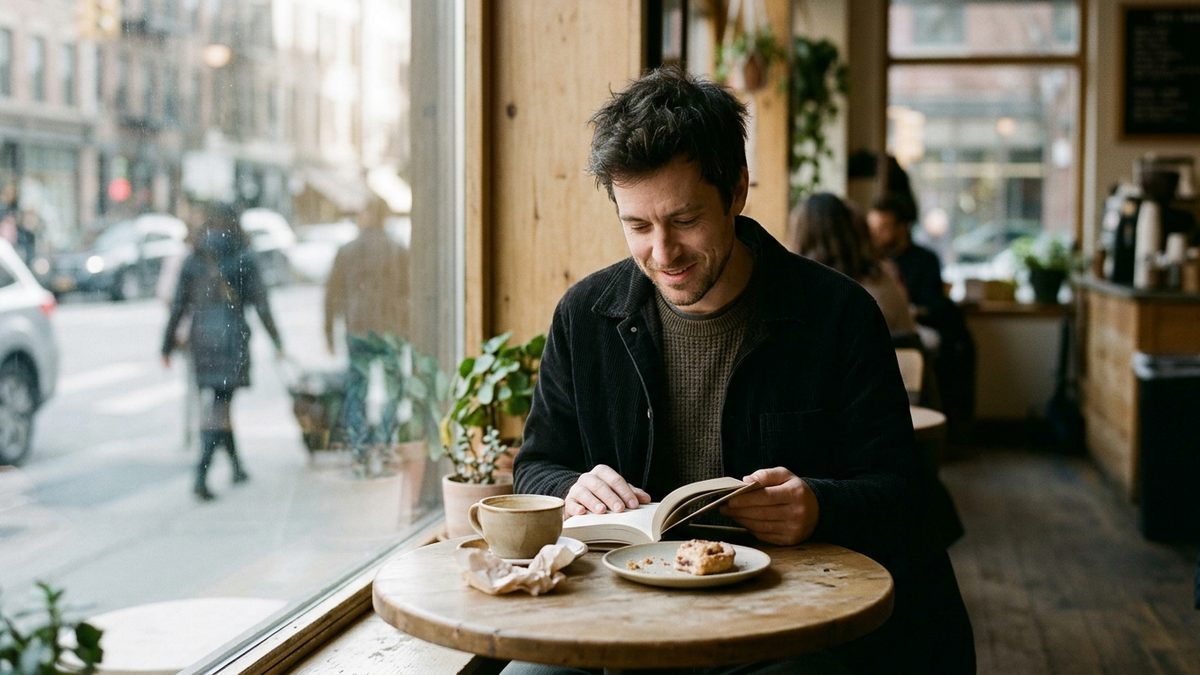
Short answer: good things to do alone include walking somewhere green, cooking a proper meal, reading, seeing a film, visiting a museum, eating out, taking a class, exercising, a day trip, and working on a hobby with your hands. The main obstacle is in your head. In a series of studies, people expected to enjoy public leisure activities less alone than with others, largely because they worried about being judged. When they actually did the activity, in this case visiting an art gallery, they enjoyed it just as much alone. And in experiments, 15 minutes alone lowered high-arousal emotions such as excitement and anxiety.
What the research says about time alone
We underestimate it. Researchers at the University of Maryland and Georgetown University found that people feel inhibited from doing enjoyable things alone in public, such as going to a film, because they expect others to conclude they have few friends. That expectation lowers their interest in going. In one study on the Maryland campus, people visited the university art gallery alone or with a companion. Those who went alone had virtually the same enjoyment, despite expecting to like it far less.
Solitude calms. In experiments at the University of Rochester, 15 minutes of sitting alone without devices reduced high-arousal feelings, both positive and negative. Low-arousal feelings rose a little, on both sides: calm and relaxation, and also loneliness and sadness. Choice made the difference. Being free to choose what to think about reduced the rise in loneliness and sadness, and in a two-week diary study, people who actively chose their time alone reported relaxation and less stress.
Doing nothing is hard. In a set of 11 studies, participants typically did not enjoy spending 6 to 15 minutes in a room with nothing to do but think, and enjoyed ordinary activities much more. The lesson for a list like this: have something to do.
Solitude isn't loneliness. Loneliness is the distress of having less connection than you want. Solitude is time alone that you've chosen. You can have one without the other.
At home
- Cook a meal you'd normally only make for guests. Set the table.
- Read a book for an hour, phone in another room.
- Take a long bath or shower with music or a podcast.
- Write. A journal page, a letter, a list of what you want from the next year. These journaling prompts help if the page is blank.
- Watch a film you chose on purpose, start to finish.
- Rearrange or declutter one room.
- Learn something with your hands: bread, knitting, drawing, a musical instrument.
- Do a puzzle or a long crossword.
- Stretch or do yoga for 20 minutes.
- Sit quietly. Start with five minutes. See how long you should meditate.
Outdoors
- Walk somewhere green. In one experiment, a 90-minute walk in a natural area reduced rumination; the same walk along a busy road didn't.
- Go for a run or a bike ride at your own pace.
- Watch a sunrise or sunset from somewhere with a view.
- Garden, even if it's pots on a balcony.
- Take photographs of your own neighbourhood as if you were a visitor.
- Hike a marked trail. Tell someone your route and when you'll be back.
- Swim.
- Go birdwatching or stargazing. Both reward patience and quiet.
Out in public
- See a film at the cinema. Nobody is looking at you in the dark.
- Visit a museum or gallery and spend as long as you like in front of one thing.
- Eat at a restaurant. Sit at the bar or by the window. Bring a book if it helps the first time.
- Work or read in a cafe.
- Go to a concert, play or comedy night.
- Browse a bookshop or library with no time limit.
- Take a class: pottery, dance, a language, climbing. You arrive alone and are surrounded by people within minutes.
- Visit a farmers' market and cook what you find.
- Volunteer for a morning.
Bigger ones
- Take a day trip to a town an hour away.
- Travel solo for a weekend. You decide everything.
- Plan a personal retreat day: no phone, a walk, a notebook, one good meal.
By time and energy
| You have | Low energy | More energy |
|---|---|---|
| 15–30 minutes | Sit quietly, bath, journal | Walk, stretch, photographs |
| 1–2 hours | Read, film at home, puzzle | Cook, run, cafe, bookshop |
| Half a day | Museum, cinema, market | Hike, class, volunteering |
| A day or more | Retreat day at home | Day trip, solo weekend |
How to get over the awkwardness
- Remember the finding. Gallery visitors enjoyed going alone about as much as going with company, after predicting they wouldn't.
- Fewer observers helps. In the same research, people were more willing to go alone when they expected fewer people to see them, and when the activity had a practical purpose.
- Start with activities that have a focus: a film, a class, a gallery. They give your attention somewhere to go.
- Bring a prop the first few times. A book or a notebook, not a phone feed.
- Go at quieter times if a full restaurant feels like too much. That's the fewer-observers effect in practice.
If your default alone-time activity is a screen, try a few from this list first. Our guide to things to do instead of scrolling is sorted by how many minutes you have.
When being alone stops feeling good
Chosen solitude is healthy. If you're alone most of the time and wish you weren't, or time alone leaves you feeling low for weeks, that's loneliness or possibly depression, and it's worth talking to a friend, a doctor or a therapist. In the US and Canada, you can call or text 988 at any time.
Questions people ask
What can I do by myself? Walk, cook, read, see a film, visit a museum, eat out, take a class, exercise, garden, travel for a day. Almost anything you'd do with someone else.
Is it weird to go to the movies or a restaurant alone? No. People expect to be judged and to enjoy it less, but in a study of art gallery visitors, those who went alone enjoyed it just as much as those with company.
What can I do alone at home? Cook a proper meal, read, write, watch a film you chose, learn a craft, do a puzzle, stretch, or simply sit quietly.
What can I do alone when I'm bored? Pick something with a visible result: bake, tidy one shelf, go for a walk with a destination, start a small project.
Is spending time alone healthy? In experiments, short periods alone lowered high-arousal emotions, and people who chose their time alone reported relaxation and less stress. Unwanted time alone is a different matter.
What is the difference between solitude and loneliness? Solitude is being alone by choice. Loneliness is feeling you have less connection than you want. They don't always go together.
How much alone time is normal? There's no standard figure. A useful test is whether you feel better or worse afterward, and whether it's what you wanted.
What are fun things to do alone outside? Hiking a marked trail, cycling, photography, swimming, birdwatching, a picnic with a book, or exploring a part of town you don't know.
What can I do alone on a weekend? A day trip, a museum and lunch, a long hike, a class, or a retreat day at home with the phone off.
How do I get comfortable being alone? Start small and choose it deliberately: a coffee out, a film, a walk.
This article is general information, not medical advice. If you feel persistently lonely or low, talk to a doctor or therapist. In the US and Canada, call or text 988 if you're in distress.
References
- Ratner RK, Hamilton RW. Inhibited from bowling alone. Journal of Consumer Research 2015;42(2):266–283. doi:10.1093/jcr/ucv012
- Nguyen TT, Ryan RM, Deci EL. Solitude as an approach to affective self-regulation. Personality and Social Psychology Bulletin 2018;44(1):92–106. doi:10.1177/0146167217733073
- Wilson TD, Reinhard DA, Westgate EC, et al. Just think: the challenges of the disengaged mind. Science 2014;345(6192):75–77. doi:10.1126/science.1250830
- Bratman GN, Hamilton JP, Hahn KS, Daily GC, Gross JJ. Nature experience reduces rumination and subgenual prefrontal cortex activation. PNAS 2015;112(28):8567–8572. doi:10.1073/pnas.1510459112
The weekly readout
One email each Thursday: what we tested, which claim collapsed under a closer look, and the one number worth paying attention to.