

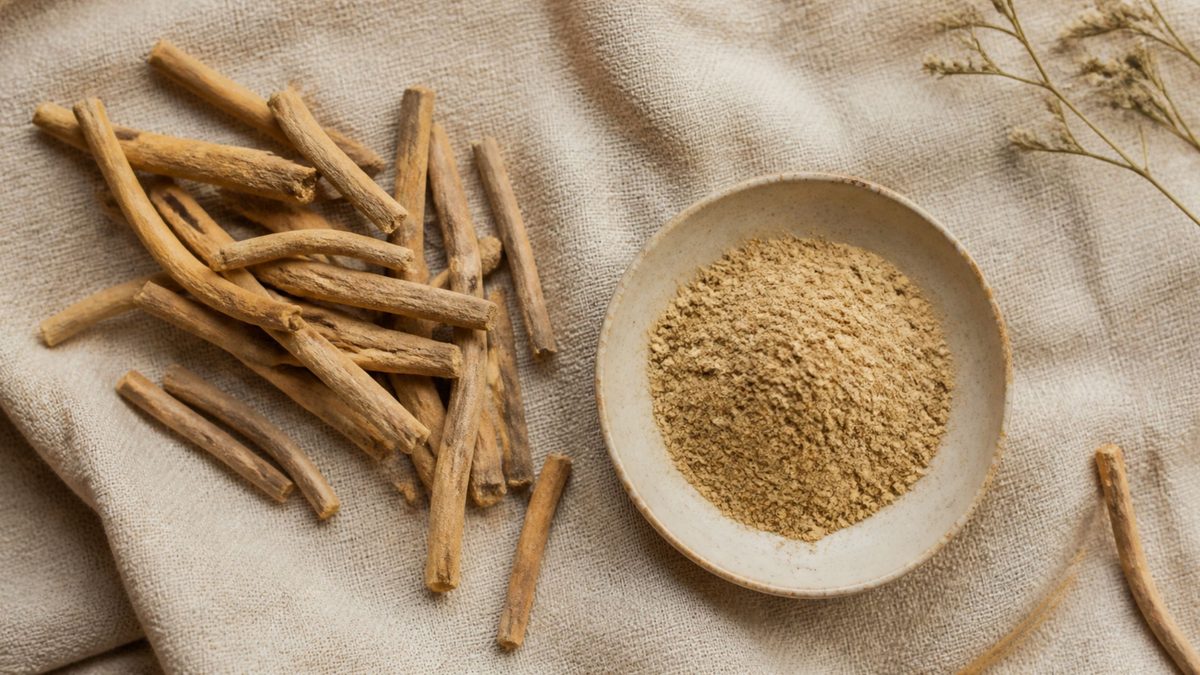
Short answer: based on what the trials measured, six to eight weeks. The placebo-controlled studies that found an effect on perceived stress, serum cortisol or sleep used 240 to 600 mg a day of a standardized root extract and took their main measurements at day 60 or week 8; some collected scores at two to four weeks as well, but reported the end-of-study result. No trial has shown an effect within days, and the single-dose studies that exist looked at cognitive tests, not mood. The 2022 dose-response meta-analysis of twelve trials found ashwagandha reduced anxiety and stress scores against placebo, with the clearest stress effect at 300 to 600 mg a day, but rated the certainty of that evidence as low. A 2021 meta-analysis of sleep trials found a small-to-moderate benefit, larger in people with diagnosed insomnia, at 600 mg or more for at least eight weeks. If you have taken a standardized extract daily for eight weeks and noticed nothing, the trials give no reason to expect that to change.
What "work" means for an adaptogen
Ashwagandha (Withania somnifera) root is sold for stress, anxiety, sleep, and sometimes strength or testosterone. The claims come with different evidence and different clocks, so the first step is to decide which outcome you are waiting for.
For stress and anxiety, the outcome in the trials was a questionnaire score (Perceived Stress Scale, Hamilton Anxiety Scale, DASS) and, in some, morning serum cortisol. For sleep, it was sleep-onset latency and total sleep time, measured by actigraphy or diary, plus the Pittsburgh Sleep Quality Index. For physical performance, it was strength or VO2 max after a training programme. In every case the researchers chose a follow-up long enough for a slow, cumulative effect to appear, which tells you what they expected.
Nothing in that design rules out an earlier effect. It means an earlier effect has not been measured, and that two-week self-reports on Reddit cannot be separated from placebo, which in these trials typically produced its own 20 to 40% improvement in stress scores.
What the trials measured, and when
| Trial | Participants | Dose | Duration | Main outcome at end | Earlier check |
|---|---|---|---|---|---|
| Chandrasekhar et al., 2012 | 64 adults with chronic stress, India | 300 mg KSM-66 root extract, twice daily | 60 days | PSS −44%; serum cortisol −27.9% vs placebo | Compliance calls at days 15, 30, 45; no interim efficacy data reported |
| Lopresti et al., 2019 | 60 stressed adults, India | 240 mg Shoden extract, once daily | 60 days | HAM-A anxiety score reduced vs placebo (DASS-21 near-significant); morning cortisol 14.2 → 10.8 µg/dL, about −23% | Mood scales at days 15, 30 and 45; cortisol at day 30; interim differences not reported in the abstract |
| Langade et al., 2019 | 60 adults with insomnia and anxiety, India | 300 mg KSM-66, twice daily | 10 weeks | Sleep-onset latency and sleep efficiency improved vs placebo | Not reported |
| Salve et al., 2019 | 58 stressed adults (PSS ≥20), India | 250 mg or 600 mg root extract daily | 8 weeks | PSS and cortisol reduced vs placebo at both doses, more at 600 mg; HAM-A reduced only at 600 mg | PSS measured at baseline, week 4 and week 8; cortisol and HAM-A only at week 8 |
Two patterns matter. All of these trials were run in India, most with industry-supplied proprietary extracts, and all were small. And the trials that collected interim scores (Lopresti at days 15, 30 and 45; Salve at week 4) reported their results as the overall change to the end of the study, so the published abstracts do not say how much of the effect was present at the halfway point. That is the honest state of the evidence on "how long": designed around eight weeks, with the earlier data points collected but not the headline.
What the meta-analyses say
Akhgarjand and colleagues pooled twelve randomized trials with 1,002 participants and found that ashwagandha reduced anxiety (standardized mean difference −1.55) and stress (−1.75) against placebo. Those are large effect sizes, which is one reason to be cautious: between-trial heterogeneity was above 80%, and the authors graded the certainty of the evidence as low for both outcomes. Their dose-response analysis found a favourable effect on stress at 300 to 600 mg a day.
A 2024 meta-analysis of nine trials (558 participants) found a mean reduction of 4.7 points on the Perceived Stress Scale and 2.2 points on the Hamilton Anxiety Scale against placebo, and a modest reduction in serum cortisol. Four of the nine trials reported mild to moderate adverse events, and the authors said long-term safety data were lacking.
For sleep, Cheah and colleagues pooled five trials with 400 participants and found a small-to-moderate improvement in overall sleep (SMD −0.59). The effect was larger in adults with diagnosed insomnia, at doses of 600 mg a day or more, and with treatment of eight weeks or longer. Mental alertness on waking and anxiety also improved; quality of life did not.
The NIH Office of Dietary Supplements, in its 2024 fact sheet, summarizes the same literature as suggesting ashwagandha "may help reduce stress and anxiety" and "might help improve sleep," while noting that studies have been small, short, and mostly from one country, and that long-term safety is unknown.
Why the forum timelines say two weeks
Three things produce the early reports. Placebo groups in these trials also improved, just less; in Chandrasekhar's study placebo stress scores fell too. Ashwagandha is mildly sedating for some people, and feeling drowsy in the first week is easy to read as "it's working." And the people who post are the ones who felt something.
None of that means the early reports are wrong for the person reporting them. It means they cannot tell you what to expect, and the trials can: results reported at eight weeks, with nothing published that isolates week two.
Dose and form
The trials used root extracts standardized to a stated withanolide content, most commonly KSM-66 (a full-spectrum root extract, 5% withanolides, typically 600 mg a day) or Shoden (a high-concentration root-and-leaf extract, 35% withanolide glycosides, 120 to 240 mg a day). Doses in milligrams are not comparable across extracts because the concentration differs by a factor of seven. Raw root powder, gummies and teas were not what the trials tested, and the amount of withanolides in them is rarely stated.
The 2022 meta-analysis found the stress effect concentrated at 300 to 600 mg a day; higher doses did not add benefit for stress, though the anxiety curve kept rising to very high doses in a small number of trials. The sleep meta-analysis found its effect at 600 mg a day or more. Taking it with a meal, once or twice daily, matches the trial protocols; timing relative to bedtime was not a variable any trial tested.
How long to keep taking it
The trials ran 6 to 12 weeks, and the safety data extend about that far. There is no controlled evidence on what happens with a year of daily use, and the NIH fact sheet, Harvard Health and the Cleveland Clinic all say long-term safety is not established. The common advice to "cycle" ashwagandha, taking a break after two or three months, is a precaution based on that gap, not on a study showing that cycling works better.
A reasonable reading of the evidence: take a standardized extract daily for eight weeks, with a note of your sleep and stress at the start and end; if nothing changed, stop; if it did, decide with the safety section below in mind whether to continue, and build in breaks.
Safety: liver, thyroid, pregnancy
The trials reported mild side effects: drowsiness, stomach upset, loose stools. The concerns that have led regulators to act come from case reports and pharmacology rather than from the trials.
Liver. The NIH LiverTox database rates ashwagandha as a likely cause of clinically apparent liver injury (likelihood score B). The reported cases typically appeared 2 to 12 weeks after starting a commercial product, with jaundice and itching, and usually resolved within one to four months of stopping. Fatal cases and emergency transplants have been described, particularly in people with pre-existing liver disease. LiverTox advises against use in cirrhosis or advanced chronic liver disease.
Thyroid. Ashwagandha can raise thyroid hormone levels, which is a benefit in some trials of subclinical hypothyroidism and a hazard for anyone with hyperthyroidism or on thyroid medication. The Dutch and French food-safety agencies both advise people with thyroid conditions to avoid it.
Pregnancy. Traditional sources describe the root as an abortifacient at high doses, and regulators treat it as contraindicated in pregnancy. Denmark banned ashwagandha in foods and supplements in 2023 after its technical university concluded that no safe intake level could be set; the Netherlands and France advise pregnant women and people with liver, thyroid or heart conditions not to use it; the UK Food Standards Agency has said it is monitoring reports but not considering a ban.
Interactions. It is sedating and may add to the effect of sleep medication, alcohol or benzodiazepines; it may lower blood glucose and blood pressure. Anyone taking medication for those should talk to a pharmacist first.
If you are reading this because you are deciding whether to take it for anxiety that affects your daily life, the trial evidence is weaker than the marketing and the safety record is thinner than for the alternatives a doctor can offer. Our articles on magnesium and L-theanine cover two supplements with longer safety histories; neither is a substitute for talking to someone about anxiety.
What is not worth doing
- Judging it in the first two weeks. No trial measured that early, and placebo effects are largest then.
- Taking it as gummies or tea and expecting trial results. The extracts in the studies were standardized root extracts at stated withanolide levels.
- Doubling the dose because 600 mg did nothing at week three. The stress effect in the meta-analysis plateaued at 300 to 600 mg; the sleep effect needed eight weeks, not more milligrams.
- Continuing indefinitely because it is "natural." Safety data stop at about three months.
- Taking it with a liver condition, a thyroid condition, during pregnancy, or alongside sedatives without medical advice.
What to actually do
- Decide what you are treating. Stress and sleep have trial support at eight weeks; strength and testosterone have weaker and shorter evidence. For sleep specifically, our articles on melatonin and magnesium glycinate cover the two more common first choices.
- Choose a root extract that states its withanolide content and matches a trial dose: about 600 mg a day at 5% withanolides, or 120 to 240 mg of a 35% extract.
- Record a baseline. A PSS questionnaire is free and takes two minutes; so is a week of sleep-onset times. If stress is the target, a short daily meditation has comparable trial evidence and no liver cautions.
- Take it daily with food for eight weeks, then repeat the measurement. Compare numbers, not feelings.
- Stop at the first sign of yellowing skin or eyes, dark urine, or unusual itching, and see a doctor. These are the liver-injury signals in the case reports.
- If it helped, plan a break at three months and reassess. If it did not, the evidence says more time will not change the answer.
Questions people ask
How long does ashwagandha take to work? The trials that found an effect on stress, cortisol or sleep measured it at 6 to 10 weeks, using 240 to 600 mg a day of a standardized root extract. Interim scores at two to four weeks were collected in some trials but not reported separately. There is no trial evidence for an effect within days.
How long does ashwagandha take to work for anxiety? The anxiety trials ran 60 days to 8 weeks. The 2022 meta-analysis found a reduction in anxiety scores against placebo across twelve trials but rated the certainty of evidence as low. Expect to judge it at eight weeks, not two.
How long does ashwagandha take to work for sleep? The sleep meta-analysis found the largest effect with at least eight weeks of use at 600 mg a day or more, and mainly in people with diagnosed insomnia. Sleep-onset latency was the outcome that improved most consistently.
Does ashwagandha work immediately? No trial has shown that. Some people report drowsiness in the first days, which is a side effect rather than the stress or sleep effect the trials measured.
How much ashwagandha should I take? The trials used 300 mg twice daily of a 5% withanolide root extract (KSM-66) or 240 mg once daily of a 35% withanolide extract (Shoden). The stress effect in the meta-analysis was clearest at 300 to 600 mg a day. Milligram doses are not comparable between extracts with different concentrations.
How long should you take ashwagandha? Trials ran 6 to 12 weeks and safety data extend about that far. There is no evidence on continuous use beyond three months. A break after two to three months is a precaution, not a tested protocol.
What happens when you stop taking ashwagandha? No trial has reported withdrawal effects. Stress and sleep scores would be expected to return toward baseline over weeks, since the effect in the trials built gradually.
Can ashwagandha damage your liver? Rarely, yes. The NIH LiverTox database rates it a likely cause of clinically apparent liver injury, with cases typically appearing 2 to 12 weeks after starting and resolving after stopping. People with existing liver disease should not take it.
Why is ashwagandha banned in Denmark? Denmark's food authority banned it in 2023 after a technical assessment concluded no safe intake level could be established, citing possible effects on pregnancy, thyroid hormones and the liver. Other countries have issued warnings rather than bans.
Is ashwagandha better than magnesium or L-theanine for anxiety? No trial has compared them directly. Ashwagandha has larger reported effects on stress scores but lower-certainty evidence and more safety cautions; magnesium and L-theanine have smaller, faster effects and longer safety records.
This article summarizes published research for general information and is not medical advice. Ashwagandha is a supplement, not a treatment for anxiety or insomnia; anyone with a liver or thyroid condition, who is pregnant or breastfeeding, or who takes prescription medication should talk to a clinician before using it, and anyone whose anxiety affects daily life should speak to a doctor rather than self-treat.
References
- Chandrasekhar, K., Kapoor, J., & Anishetty, S. (2012). A Prospective, Randomized Double-Blind, Placebo-Controlled Study of Safety and Efficacy of a High-Concentration Full-Spectrum Extract of Ashwagandha Root in Reducing Stress and Anxiety in Adults. Indian Journal of Psychological Medicine, 34(3), 255–262. doi:10.4103/0253-7176.106022
- Lopresti, A.L., Smith, S.J., Malvi, H., & Kodgule, R. (2019). An investigation into the stress-relieving and pharmacological actions of an ashwagandha (Withania somnifera) extract: A randomized, double-blind, placebo-controlled study. Medicine, 98(37), e17186. doi:10.1097/MD.0000000000017186
- Salve, J., Pate, S., Debnath, K., & Langade, D. (2019). Adaptogenic and Anxiolytic Effects of Ashwagandha Root Extract in Healthy Adults: A Double-blind, Randomized, Placebo-controlled Clinical Study. Cureus, 11(12), e6466. doi:10.7759/cureus.6466
- Akhgarjand, C., Asoudeh, F., Bagheri, A., Kalantar, Z., Vahabi, Z., Shab-bidar, S., Rezvani, H., & Djafarian, K. (2022). Does Ashwagandha supplementation have a beneficial effect on the management of anxiety and stress? A systematic review and meta-analysis of randomized controlled trials. Phytotherapy Research, 36(11), 4115–4124. doi:10.1002/ptr.7598
- Cheah, K.L., Norhayati, M.N., Husniati Yaacob, L., & Abdul Rahman, R. (2021). Effect of Ashwagandha (Withania somnifera) extract on sleep: A systematic review and meta-analysis. PLOS ONE, 16(9), e0257843. doi:10.1371/journal.pone.0257843
- National Institutes of Health, Office of Dietary Supplements (2024). Ashwagandha: Is it helpful for stress, anxiety, or sleep? Fact Sheet for Health Professionals. ods.od.nih.gov
- National Institute of Diabetes and Digestive and Kidney Diseases. Ashwagandha. In: LiverTox: Clinical and Research Information on Drug-Induced Liver Injury. Bethesda, MD; updated 2024. ncbi.nlm.nih.gov
- Vijayakumar, V., Kuppusamy, M., Arumugam, V., Balakrishnan, A., Bhandari, R.B., Boopalan, D., Ponnurangam, R., & Thirupathy, V.S. (2024). Effects of Ashwagandha (Withania somnifera) on stress and anxiety: A systematic review and meta-analysis. Explore, 20(6), 103062. doi:10.1016/j.explore.2024.103062
The weekly readout
One email each Thursday: what we tested, which claim collapsed under a closer look, and the one number worth paying attention to.